 For centuries the contribution of lesbian, gay, bisexual and transgender people to society has been ignored. Until recently most LGBT people preferred to avoid attention to escape victimisation and harassment. This prejudice was enforced by law. In the UK it is only circa 40 years since homosexuality was decriminalised.
In recent years the notorious Section 28 restricted any positive debate about homosexuality especially in schools. Section 28 was finally repealed in 2003, but its legacy means that many schools and local authorities fail to have any positive debate about LGBT issues in the classroom. In 2005 Civil Partnerships came into law with full legal rights for same sex marriage coming into place less than 12 months ago.
Much progress has since been made and now legislation protects rather than prosecutes LGBT people. But homophobic bullying is prevalent in our schools and workplaces, and prejudice is still alive and well.
In many countries around the world people from LGBT communities are marginalised, and face persecution, and in some countries even the death sentence.
LGBT History Month is important to counter these centuries of marginalisation.
PCS is proud of its achievements in supporting and promoting equality for lesbian, gay, bisexual and transgender people in the union, in the workplace and beyond. PCS as a union is committed to supporting equality for all.
LGBT History Month is an opportunity for us to celebrate the contribution made by lesbian, gay, bisexual and transgender people, and to reflect on the damage that centuries of homophobia has caused.
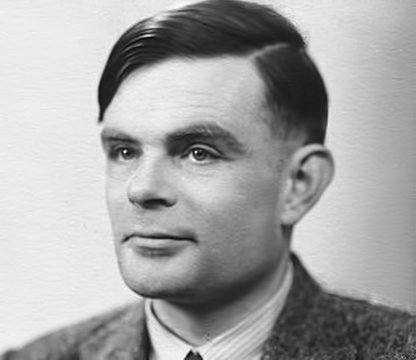 Alan Turing (1912 – 1954)
Alan Turing’s life is a classic example of how LGBT people have made important contributions to society, and of how society’s prejudice towards them has often robbed them of a dignified and fulfilling personal life.
Turing (1912 – 1954) was a British mathematician, logician and cryptographer. He is considered by many to be the father of modern computer science. He designed and built some of the earliest electronic, programmable, digital computers.
During the Second World War, Turing headed the classified mission at Bletchley Park to crack the Nazi’s Enigma machine code (which was used to send secret military messages). Many historians believe that breaking the Enigma code was central in bringing the war in Europe to an end.
Despite Turing’s huge and lasting contribution to computing, and the part he played in the allied war effort, his personal life was less auspicious.
In 1952, like many other gay men at that time, he was convicted of acts of gross indecency. He was given a choice between prison or a course of hormone therapy to reduce his libido. Turing chose the therapy, which resulted in bodily changes such as the development of breasts.
Turing was found dead in 1954, apparently after having eaten an apple laced with cyanide. Although the cause of death was ruled as suicide other theories, such as assassination due to his sexuality, have also been suggested.
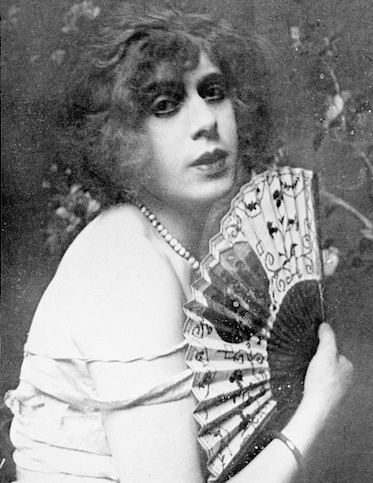 Lili Ilse Elvenes 1882 – 1931
Lili Ilse Elvenes, better known as Lili Elbe, was a Danish transgender woman and one of the first identifiable recipients of sex reassignment surgery.
Elbe was born Einar Magnus Andreas Wegener and was a successful artist under that name. She also presented as Lili (sometimes spelled Lily) and was publicly introduced as Einar’s sister. After transitioning, however, she made a legal name change to Lili Ilse Elvenes and stopped painting.
Elbe met Gerda Gottlieb at the Royal Danish Academy of Fine Arts in Copenhagen and they married in 1904, when Gottlieb was 18 and Wegener was 22. The two of them worked as illustrators, with Elbe specializing in landscape paintings, while Gottlieb illustrated books and fashion magazines. They both travelled through Italy and France, eventually settling in Paris in 1912, where Elbe could live openly as a woman, and Gottlieb a lesbian.
In the 1920s and 1930s, Elbe regularly presented as a woman, attending various festivities and entertaining guests in her house. One of the things she liked to do was disappear, wearing her modelling fashions into the streets of Paris in the throngs of revellers during the Carnival. In 1930, Elbe went to Germany for sex reassignment surgery, which was experimental at the time. A series of four operations were carried out over a period of two years.
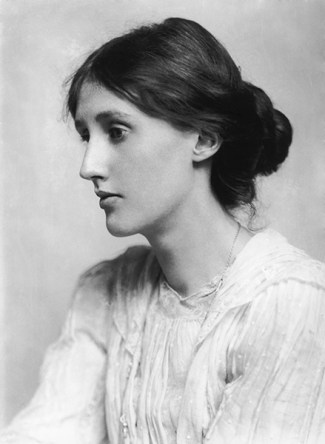 Virginia Woolf 1882 – 1941
Adeline Virginia Woolf was an English writer and one of the foremost modernists of the twentieth century.
During the interwar period, Woolf was a significant figure in London literary society and a central figure in the influential Bloomsbury Group of intellectuals. Her most famous works include the novels Mrs Dalloway (1925), To the Lighthouse (1927) and Orlando (1928), and the book-length essay A Room of One’s Own (1929), with its famous dictum, “A woman must have money and a room of her own if she is to write fiction.
Virginia Woolf met fellow writer Vita Sackville-West in the early 1922, and the women began a romantic affair that lasted for a number of years. Whist it is easy to prove pretty much anything with the internet nowadays, and also disprove it, Virginia Woolf’s bisexuality is almost impossible to argue with.
Vita and her husband were both bisexual, and had an open marriage, and once Virginia’s own husband gave his blessing to the affair, the two woman began a relationship. This remained secret, but not because they were ashamed. Virginia’s publisher, Bloomsbury, held a strong opinion against lesbianism, and so their secrecy can be attributed to Virginia’s passion for her career and her writing. But although they kept their tryst on a strictly “need to know” basis, history has proven the affair without doubt.
 PCS Fylde